
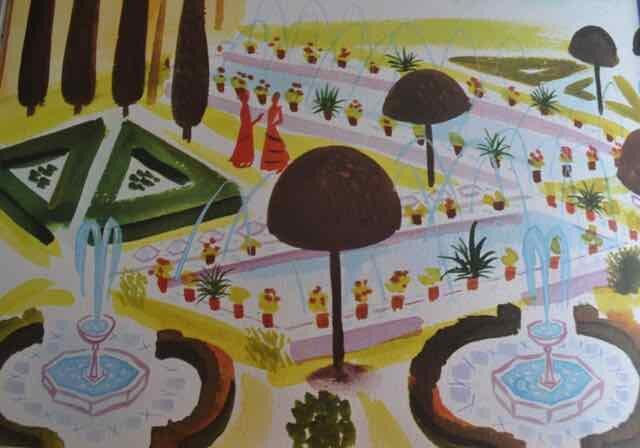
Garden water features in the spotlight for summer in Lymington

Article by Debby Lockey, Lymington Garden Designer
During hot summers a water feature in the garden comes into its own as it helps to cool the atmosphere of a garden.
However, in our temperate climate it is not often that we appreciate this aspect of a water feature. Instead we want water in the garden for lots of other reasons: beauty, relaxation, to attract wildlife or to show off our wealth. Throughout history, water has been used in gardens for all these reasons, plus more.
Water features in ancient gardens (300BC – 800AD)
The need to have water in the garden must be intrinsic in our nature as the earliest records of gardens show they had water features. A model found in the tomb of Meketre, who was chancellor to King Mentuhotep II of Egypt shows a walled garden with a fish pond shaded by a fig tree. The pool is geometric with water flowing into the pond from pipes.
The use of water in these ancient gardens had both a symbolic and practical purpose. The forced formality of the garden and pond reflected the power of these people and how they were able to control and impose man-made order on an unruly nature. To make a garden bloom in the desert and have extra water, the source of life, running in rills and pools gave the kings a god- like status, and many kings held court in their gardens expressly to show off their power.
In Roman gardens these water features became grander, to reflect their wealth and status. Canals, fishponds and fountains were usually present. In contrast Islamic cultures used their gardens to symbolise heavenly paradise in a barren dessert. These gardens usually had a central fountain that represented the giving and sustaining of life, while the movement and energy necessary in creating the fountain symbolised life’s dynamism.
On a more practical level, the water could be used to cleanse the body, and irrigate the plants. In addition, the gentle splashing sound of a fountain would have added to the tranquillity of the garden and helped to mask any noises.
Medieval Gardens (800-1500)
With the fall of the Roman Empire around 800 AD the attitude to gardens changed from viewing them as a place of beauty and sophistication, to seeing them as a place to hide away from nature, because nature had become the frightening enemy.
Christianity become the dominant force in Europe and gardens became places to provide food for the community, which reflected the Christian ideal of self-sufficiency. Plus the work required to maintain the garden was seen as a form of worship dedicated to the glory of God.
Water in the garden was still symbolic. To Medieval Christians the 3 states of water: the bubbling source of water; the moving, falling state of water; and the still pool represented the three parts of the trinity. The pools of water also had the added bonus of being stocked with fish and wildfowl which could be eaten.
If you are interested in Medieval gardens there is a very attractive Tudor Garden at The Tudor House, Bugle Street, Southampton. There is also a re-creation of a medieval herber in Queen Elenor's garden beside the Great Hall in Winchester.
The Renaissance Period (1500-1660)
With the Renaissance Period we see a change towards gardens being a place to relax and cultivate the mind. In Italy in particular there was a shift away from fortified houses with battlements towards the ‘loggia’ style garden where three sides of the garden were enclosed by buildings but one side had beautiful views. Water played a crucial role in these gardens.
When Donato Bramente was commissioned to design Belvedere Court at the Vatican for Pope Julius II in 1509 we see the beginning of sculptures being used in pools. From then on gardens in Renaissance Italy became more ostentatious. Water was used to great effect with fountains and waterfalls cascading throughout the gardens. At the villa d’Este at Tivoli water cascaded down the terraces to create large waterfalls. 100 fountains were present as well as water stairs, pools and canals. In the Boboli gardens in Florence hydraulic engineering changed the gardens from accepted geometric style to one of fantasy with courtyards being turned into seas and secret fountains occurring.

The Formal Period (1660-1714)
In France, these elaborate renaissance gardens were not so popular. The flat landscape around Paris was not conducive to terracing, steps etc. Plus the French conservative hunter – soldier attitude meant they preferred more extensive masculine gardens. Here order, symmetry and grand scale reflected the military presence needed to design and construct these gardens. These formal gardens also symbolised the King’s need to rule and control this one united country.
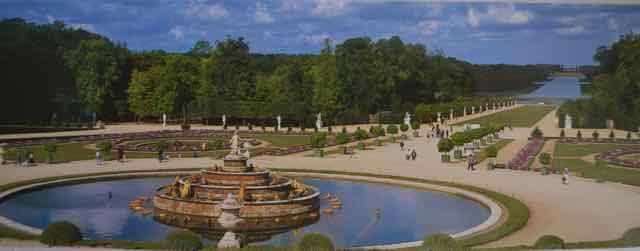
This manipulation of nature was expressed through the water features built at this time. At Versailles a special machine was built to move the water up from the Seine to create the magnificent lakes at Versailles.
Large flat lakes became popular as they created a feeling of vastness, as it was difficult to know where the water ended and the sky began. At Vaux le Vicomte, a garden built for Fouquet by Le Notre, Le Notre used fountains, statues and optical illusions to give a false perspective which gave the garden a feeling of infinity.
Early Landscape Movement (1714 – 1830)
As it became apparent how expensive it was to run these formal gardens, and the mood shifted towards wanting to create the sensations of happiness, tranquillity, grandeur, melancholy, awe and wonder within the garden, so the style of gardens changed from trying to dominate nature to wanting to replicate it. Now water features began to copy nature, so meandering streams or pools of water with cascades and waterfalls became popular.
It was during this time that Capability Brown began to influence the style of gardening. He widened rivers, created lakes and moved earth to produce hills.
The Victorian Period (1830-1901)
This was a time when new and exotic plants were arriving in Britain and people wanted to show them off in their gardens. They also wanted to show off their skill at being able to grow them. So plants took centre stage in the garden. Water was not so important but ‘American Gardens’ became very popular. These gardens were basically bog gardens composed of bog loving plants imported from eastern America.
20th and early 21st Century
There was a backlash against bedding plants and all things Victorian, and once again gardeners looked to nature for inspiration. Climbers should be allowed to ramble through trees, bulbs should be massed in grass and water and rock should look natural. This was also the time when one third of the housing stock was built and most of these had private gardens. Gardening was therefore no longer a pasttime for upper classes or wealthier middle classes. Unfortunately, the war came along and most gardens were given over to growing food.
After the war many more houses were built. Now the move was towards incorporating the existing landscape of the area into the estate. Fewer trees were cut down and wild gardening became popular to contrast with the invasive urban sprawl. The move towards organic gardens also became more popular as the effect of chemicals on the environment became known. Natural ponds became very important as a way of attracting those animals needed to keep predators, such as slugs, at bay.
As more people became involved in gardening water features reflected the smaller family gardens. Reservoir-based features have become very popular as they don’t present a danger to children, but they do still provide the joy that moving water has given throughout the ages. Plus they add to the calm and tranquillity of the garden and help to mask the noises of the city, some of the very reasons that inspired the Egyptians to have water in their ancient gardens.
So we can see that throughout history, water has been popular in gardens. It has never gone out of fashion, its presence has just changed to suit the culture and fashion of the time.
As a garden designer a water feature is something I always recommend to my clients as I feel it adds that extra special something to the atmosphere of the garden.
Article by Debby Lockey, Lymington Garden Designer
 I recently went to the Gardeners’ World exhibition in Birmingham. It was less slick than Chelsea, with fewer gardens to look at, but the plant stalls were manned by experts happy to give advice; there were talks by Alan Tichmarsh and Carol Klein to name just two, and there weren’t masses of people so you could mooch about quite happily and not feel you were holding people up. So all in all it was a very relaxing day. I’d recommend it to anyone who doesn’t like throngs of people but enjoys gardening.
 The organic approach to controlling black spot
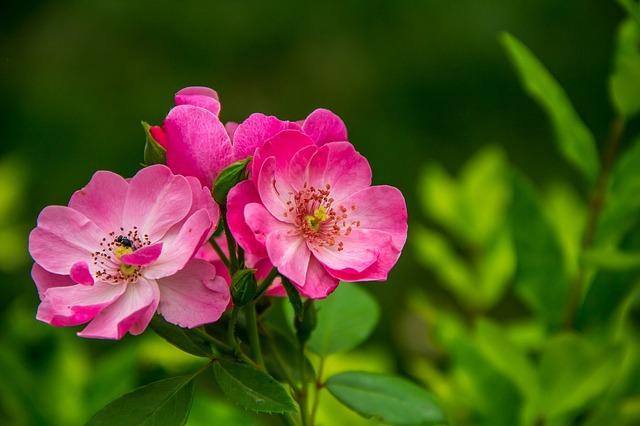 Which Magazine did a survey on best chemicals to use to fight black spot. Their results showed that any product with the active ingredient Myclobutanil or Triticonazole didn’t stop the disease, but it did help to slow down its advances and so kept the rose looking healthy.


 A winning combination
 If you have made it into your garden and were really unhappy with what you saw, now is the time to do something about it. At this time of the year it is possible to see how the space is being used in the garden. Many perennial plants can be moved without too much stress. Lawns can be seeded and the weather is better suited to large landscaping projects.


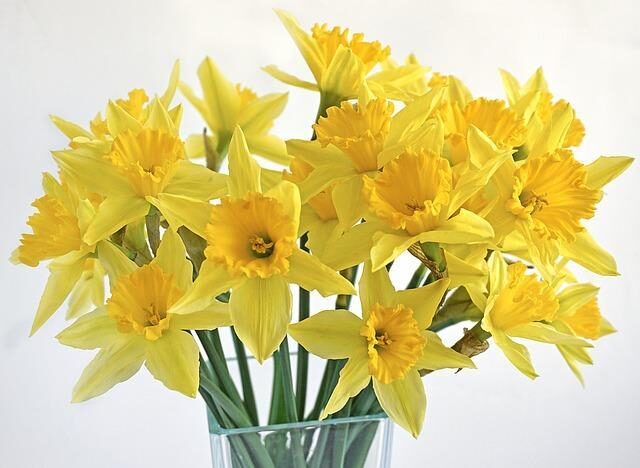


 I mentioned earlier the colour wheel used by artists. This is a wheel created by stretching the three primary colours, red, blue and yellow into a circle. Between these primary colours, are the secondary colours of orange, green and violet. The gradation of colours is then represented by subdividing the colours even further. The simplest way to use the colour wheel in relation to planting is to either use colours that are harmonious i.e. colours that are next to one another on the colour wheel and so share a pigment; alternatively, you can use colours that complement one another. These are colours that are opposite one another on the colour wheel and so don’t share a pigment.
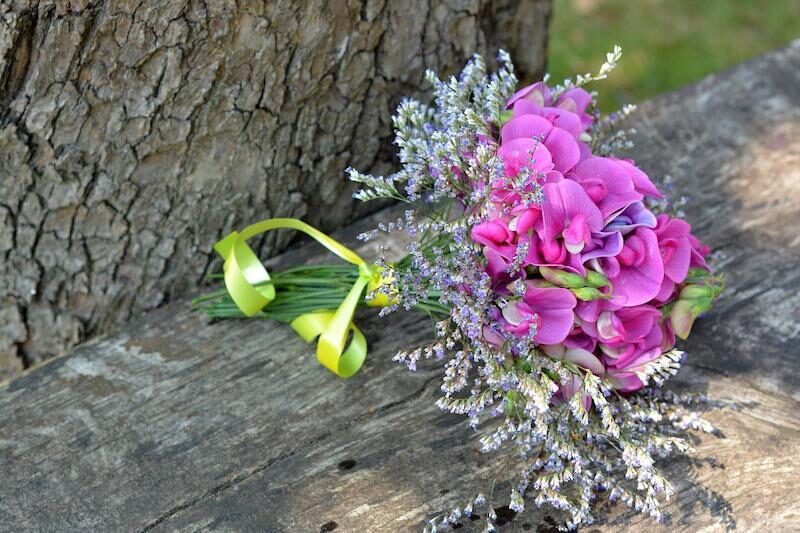
 We are already into March and I’ve realised that I haven’t sown my sweet peas. I usually try to sow the seeds during the winter months as I feel these cold tough conditions produce a more robust healthy plant. However it is not too late. This article will guide you through the process of growing your own sweet peas from seed.
  Which pots to grow them in


 Fairweather's is a family owned and run business - and it shows. Patrick Fairweather's passion and expertise is at the heart of the business and is reflected by every single member of his courteous and knowedgeable team - you'll find someone you can ask about literally anything to do with growing all kinds of vegetables, shrubs, plants... for outdoors and in. Inspiration and advice is available literally wherever you walk, about anything you might need to know.
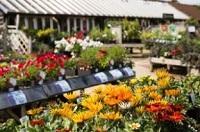 Fairweather’s historic buildings offer a welcoming and relaxing atmosphere for browsing and choosing all manner of equipment and items for your garden or conservatory, from comfortable quality furniture to clever and unusual garden related gifts and greetings cards.
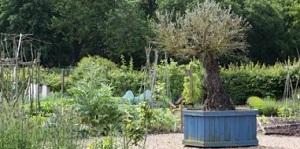 We pride ourselves on the wide range of plants that we provide, backed up by expert advice and a five year guarantee on all hardy plants sold. We have particular expertise in Lavender and Agapanthus which along with many of our plants we've grown ourselves in Beaulieu.
 Lavenders are perhaps the most loved plants in our gardens. These aromatic, evergreen shrubs have soft grey-green foliage and long-stemmed spikes of fragrant flowers, which appear from spring to late summer depending on the variety you choose.
 Recently thanks to popular demand we've set up an online shop where you can buy our specialist range of Agapanthus and Lavender, and also Fairweather's Gift Vouchers for an easy yet still thoughtful gift for a gardener friend or relative (and who doesn't need something for their garden or conservatory!). Whether you're based locally but need something in a hurry, or you're not close enough to visit us, try our online shop and we'll welcome you there instead.
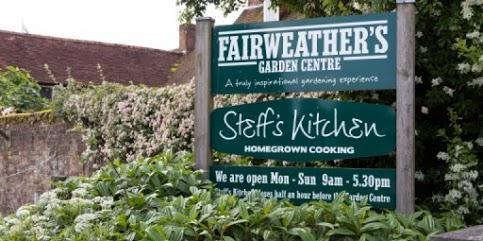 Patrick’s Patch is an inspiring, educational and productive garden that we have built adjacent to the Garden Centre in Beaulieu High Street – it’s free to enter but any donations given go to the NGS (National Gardens Scheme). Year round we grow a wide range of vegetables, fruit, herbs and cut flowers that are used in our Café – Steff’s Kitchen. Free courses are held regularly and dates can be found on our website.