
Shrove Tuesday: how do you eat your pancakes?
by Gill Hepburn and Fiona Hill - updated for 2021
Pancake Day, or Shrove Tuesday, is the traditional feast day before the start of Lent on Ash Wednesday. The word shrove is a form of the English word shrive, which means to obtain absolution for one's sins by way of Confession and doing penance. Lent, the 40 days leading up to Easter, was traditionally a time of fasting and on Shrove Tuesday, Anglo-Saxon Christians went to confession and were "shriven" (absolved from their sins). A bell would be rung to call people to confession. This came to be called the “Pancake Bell” and is still rung today.
Shrove Tuesday always falls 47 days before Easter Sunday, so the date varies from year to year and falls between February 3 and March 9. Shrove Tuesday was the last opportunity to use up eggs and fats before embarking on the Lenten fast and pancakes are the perfect way of using up these ingredients.
PANCAKE RECIPES
Lots of people say it's fiddly but really it's not! All you need is a little time, eggs, milk, flour and some butter or oil - and someone to appreciate them. Oh yes, and just a little patience and acceptance if the first one (which can be yours) goes wrong!
 Basic pancake recipe:
100g of plain flour
2 eggs
300ml of milk
Olive oil
Gluten free recipe:
125g of gluten free plain flour
2 eggs
250ml milk
Olive oil
Equipment
Basing upon making just one of the mixtures above, you'll need: 2 plastic jugs, damp dishcloth, 1 bowl and 1 small frying pan. I use a smaller frying pan as it's easier to turn over/flip the pancake.
Method
Right now weigh up the flour in your bowl, making a well in the middle, then add the eggs in the centre, adding a little milk and whisk together (I used an electric hand whisk which was ideal to get done air into the mixture). Once it's being combined, add the remaining milk slowly as you're whisking.
 Once all combined pour into one of the plastic jugs and set aside.
Now get your pan ready.... heat the pan and pour 5 tablespoons (approx) of olive oil into the pan. Yes all of it at once! Now it's coated the pan, tip the whole lot into the other plastic jug. Now pour in some mixture to coat the bottom of the pan. As soon as the sides start to cook, go around with a flat knife, ideally a palette but not essential. And try going underneath to loosen the pancake from the pan. This makes it easier to turn over/flip!
Once it looks light golden, try flipping it over. And then when the second side is down, turn (or flip!) onto a plate.
Depending on your pan, you may find that the pan doesn't need re-oiling, however if it does, pour the oil into the pan and start the process again.
Please note: you'll need to make up the mixture and the pancakes of the non-gluten pancakes before the others to stop cross-contamination.
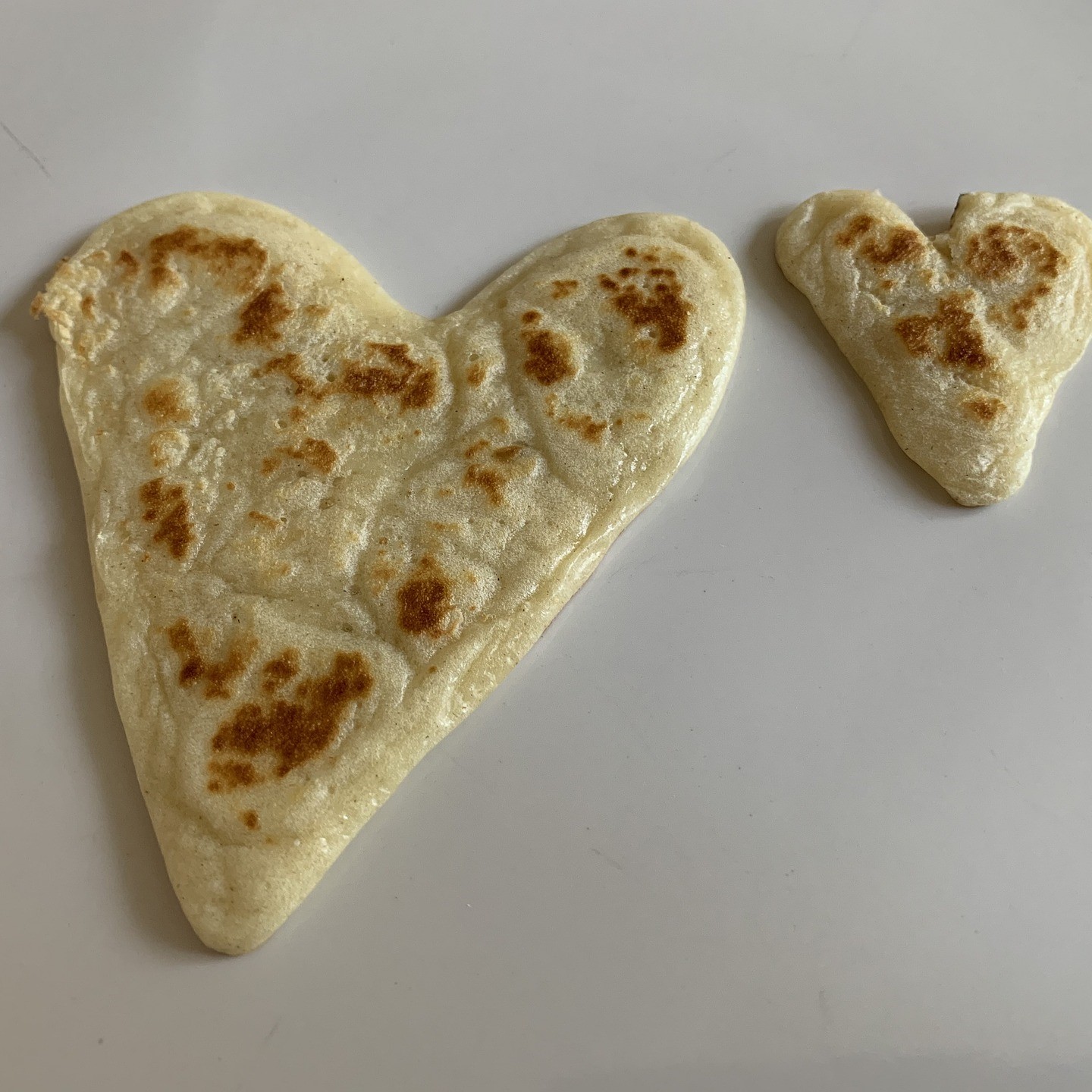
American pancakes - great for shapes, too!
by Fiona Hill of Real Food
6oz plain flour
Pinch salt
1 level teaspoon baking powder
2 level tablespoons caster sugar
2 eggs
1/2 pint milk
2oz butter melted
Vanilla extract
You will need 2 bowls, measuring jug, frying pan and a whisk
Sift the flour salt and baking powder into a bowl, add the caster sugar.
Measure the milk, and add the egg yolks, melted butter and vanilla and beat till mixed.
Add the liquid to the dry ingredients and mix together.
Whisk the egg whites till stiff and fold into the rest of the mixture.
Heat up the frying pan and put a ladle or large spoonful into the pan, bubbles will form and once they pop turn it over for 30 seconds and then place on a warm plate and keep warm, continue till all the mixture is used , serve with maple syrup.
How do you eat yours?
by the Editor
Pancakes are incredibly versatile and can be lots of fun! Over the years a 'Shrove Tuesday' tradition has grown in our house, based around a comment frequently made by my children that 'you can never eat enough pancakes...'
The day starts with... (you've guessed it) ... pancakes. Some years we've opted for the simple thick American variety, this year the traditional 'crepe' style won out - and this year we went gluten free as well. And now that the older two travel further to school, we were up 'flipping' early, with my daughter preparing a batch to eat with her friends on the bus...
Later in the day the ritual continues, with savoury pancakes - or galettes (I usually try and accompany with a salad here...), followed by more sweet pancakes.
Trust me, come the end of the day, I've usually have enough of pancakes for the year and it'll be some months before I agree to make another batch for breakfast!
Our suggested toppings:
 Savoury pancakes/galettes:
- Cheese and ham
- Cheese and tomato
- Cheese and mushroom
- Cheese, parma ham and creme fraiche
Sweet pancakes:
- Maple syrup - golden syrup - agave syrup
- Blueberries - and any other berries for that matter!
- Chocolate spread - messy, but delicious
- Jam
- Sugar and lemon juice
How do you eat your pancakes?
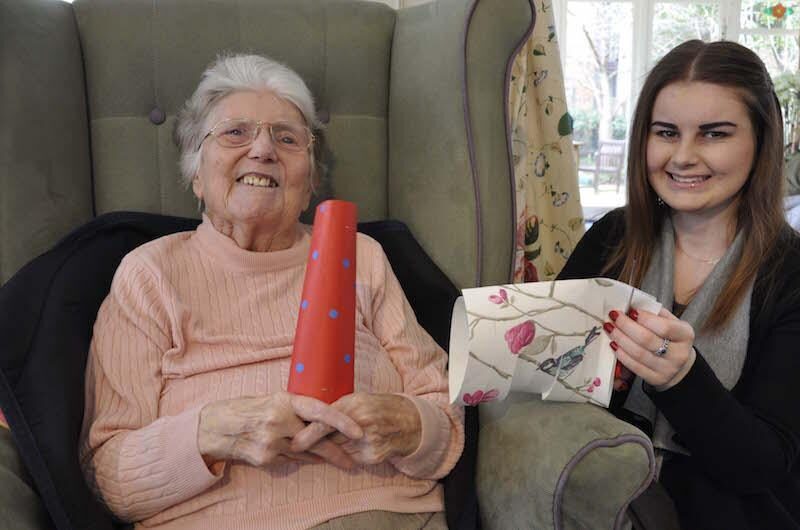

 Born in Glasgow, Joan lived in Canada for a number of years where she worked as a secretary. She met her late husband in Canada while playing tennis and the couple married in the 1940's. She has travelled to Egypt and Portugal and still enjoys reading history books.
 Caring is a full time job and one which can be very demanding, both emotionally and physically. So, it’s essential that as a carer you take a well-deserved and needed break from caring. You should not feel guilty about needing a break from the person you’re caring for. In fact, it’s widely recognised that respite care is good for both the carer and the person being cared for.
 Tips on introducing the subject of Respite Care





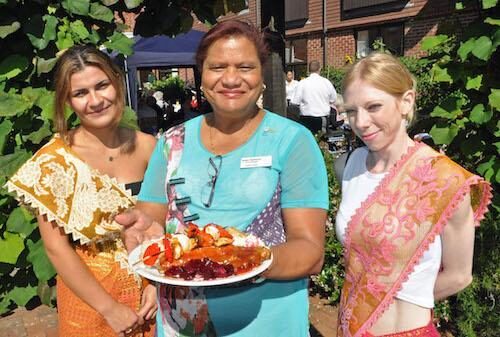

 “Many of our residents may have enjoyed holidays in the Far East and Asia, including Thailand, explained Jackie Seeborun, Home Manager. "They really appreciate being able to relive the taste, sights and sounds again of that fascinating part of the world. It’s been a lovely day, much enjoyed by everyone. The food and dancing have been fantastic and staff, residents and families have had a great time.”

 Residents were joined for the visit by a large number of their friends, family and grandchildren. Julia continued: “Petting animals is very therapeutic as well as a lot of fun and it was heart warming to watch our residents enjoying them alongside the many children who were visiting.”
 Second, an animal provides a talking point, a way to encourage those who may have withdrawn into themselves to start engaging with others. Just watch anyone walking their dog. People stop to ask questions about the animal, and this often leads to further conversation. Studies have shown that increased sociability is strongly associated with feelings of happiness and contentment.
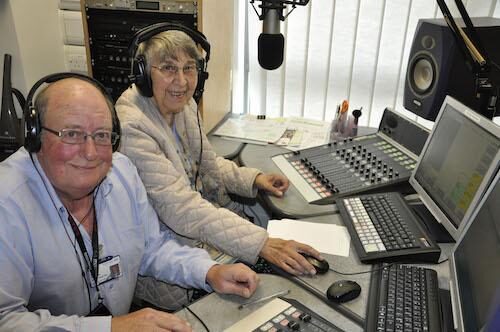
 The six-strong party from Colten Care’s
  Hospital radio presenter Michael Robinson, who was host for the day, said: “We really enjoy producing the shows and to welcome some of our Colten Care music fans face-to-face at the studio was lovely.”

 Sophie and Jodie have their feet solidly on the ground while caring for residents at Colten Care's
  Both Sophie and Jodie have very personal reasons for supporting Oakhaven; Jodie's grandmother is currently being cared for at the hospice; Sophie also has a family friend who will be using the service and both women have cared for Woodpeckers' residents who have spent time in the hospice.