Discover Lymington: a walk from Lymington to the Walhampton Monument
From the Victorian station to the obelisk in memory of one of Lymington's most esteemed gentlemen
 A walk from Lymington's Victorian station (now towered over by modern dwellings), across the Lymington river to the famous monument honoring Admiral Sir Harry Burrard Neale. From there visit Goodall's strawberries, New Forest Adventure Golf and/or Macdonald Elmers Court. A delightful stroll to the other side of Lymington, taking in a few historical tales en route!
The walk starts and finishes at Lymington Town station
Approx distance: 1.8 miles (3km) - approx 1 hour
Walk: paths and gravel track
Weekly What's On from Lymington.com
Every Friday we email our FREE Weekly What's On detailing detailing what's on in the New Forest and Lymington area, including many community events which are free of charge (or low charge). Subscribe free of charge to receive the Weekly What's On from Lymington.com below. You can also follow us on Facebook (Lymington Hampshire), Twitter (@lymingtondotcom) and Instagram (@lymingtondotcom)

Lymington station
Lymington Town Railway Station is a branch line from Brockenhurst. The official opening of the Lymington Railway Company's line took place on 12 July 1858, to the accompaniement of the town band and church bells. In 1884 the railway track was continued southwards to the new Lymington Pier station so that Isle of Wight ferries might perform at all states of tides.
Turn left and follow Waterloo Road to the main road, turning right to find yourself along the Bridge.
 The main path over the beautiful Lymington River, this bridge has a slightly darker history as part of a scheme by King Charles I, looking to raise money or to pay debts without money passing. All of the mudflats between Calshot and Hurst Castle were granted to Robert Pamplin, whose descendants decided to build a great dam across Lymington River, simultaneously upsetting the Corporation who introduced an action stating that navigation through the town would be disrupted if nothing was done to prevent it. Furthermore, ship owners were irritated by the dam’s effect on the river’s tides and the silt that it built up. This led to a toll being exacted on all who passed over the bridge.
The King is amused!
In 1899, King Edward VII was enjoying one of his first car rides as a passenger of the second Lord Montagu. Having passed through the Forest they were made to wait for an inordinately long time at the toll bridge, for, as to the amusement of the King, gatekeeper Mr G Gooden was vexed after an earlier driver had sped over the bridge without paying! Tolls continued until 1958.
 As you cross the bridge, note the difference on the left and right. Had the toll bridge not been built, the water would have flowed up river today.
After the bridge, turn right walk alongside the river, following Undershore. Follow undershore to the end of the metal barrier on the right hand side.
 To the left find a gravel track leading to private houses, just off this is a footbath to the Monument, indicated with a red arrow on the photo.
Follow the path through woodland to the Monument.
The Burrard Neale Monument is a tribute to Admiral Sir Harry Burrard Neale, who served in the Royal Navy and went on to befriend the king and act as a shipmate. Perhaps his most notable success was in 1797, when he extracted his ship out of the Mutiny of the Nore while keeping his crew under control. His family, who owned the Walhampton Estate from 1688, were very involved in the life of Lymington as Members of Parliament or Town Mayor. When the Admiral passed away in 1840, the obelisk monument was erected in his memory, and it remains there today to be enjoyed by the public.
After taking in the rich history behind the monument and appreciating its surrounding views, find Monument Lane to the rear of the monument.
Walk down Monument Lane and turn left back onto Undershore Road.
 Berries and Mini Golf
At Undershore Road, turn left and take care as the road narrows. Follow the path up to the next turning on the left which leads to Lymington Golf Centre, New Forest Adventure Golf and Goodall’s Strawberry Farm.
Goodall's strawberries are seriously the best - the best you'll ever taste. That combination of New Forest and sea air - cannot be beaten. And Goodall's do lots of other berries too, plus homemade cake. Take a pitstop in their 'Tearoom' and enjoy a moment of pure bliss relaxing with a proper cream tea with freshly picked strawberries.....The tearoom has plenty of space to run around and some toys for children too. Find out more about Goodalls here.
 Over the way, New Forest Adventure Golf is a simply fabulous way to pass a few hours as family or friends. An 18 hole crazy golf course based on the New Forest, complete with hand working Isle of Wight ferry and animals to spot at each hole. Who cares if the 10 year old beats you, I mean, really... (still trying to come to terms with that!) A great few hours for all ages - and with it's own little kiosk selling ice creams too, perfect in warm weather.
Now, for the totally lazy, combine your visit here with hopping on to the New Forest Tour bus.
Otherwise, if you've not yet had your fix of tea and cake, head over the road to Macdonald Elmers Court Hotel to enjoy a traditional afternoon tea.
 Elmers Court
Elmers Court was once owned by the Whitaker family of nearby Pylewell Park. James Whitaker, MP and JP, used the building as a courthouse. During the Second World War it was requisitioned by the War Office and used to co-ordinate D Day landings. It was also used as a Spy Training School and was where the famous intelligence agent Odette Sansom Hallowes was trained.
Totally a hotel and country club, part of the Macdonald chain, Elmers Court's desirable location provides guests with exceptional views over and walks to Solent shore. Why not treat yourselves to a traditonal afternoon tea at Elmers Court (booking essential)
From Macdonald Elmers Court turn left back down Undershore.
 Ferries to Yarmouth, Isle of Wight
You will pass the Wightlink ferry terminal on the left.
Cargo was shipped to the Isle of Wight from May 1836 in specially designed tow-boats. In 1913 nearly 700 cars were carried on the Lymington-Yarmouth route. Cattle were also transported - leading to some frantic scenes as stubborn animals refused to embark, some ending up in the water!
The revolutionary MV Lymington came into service in 1948. This double-ended vessel was the first to use Voith-Scheider propulson, which enabled her to move in any direction without rudders. After early teething problems, the vessel carried 400 passengers and 16 cars which drove on and off specially constructed slipways. In March 1948, the larger MC Farringford joined the Lymington-Yarmouth service.
By 1955, 42,000 cars made this crossing. On 21 September 1959, the Troon built MC Freshwater was added to the fleet and the river was dredged to enable two vessels to pass within its narrow confines.
As you walk along the road, you'll see The Ferryman on the right, previously known as the Waggon & Horses which dates back to 1643 as the Waggon Ale House. In 1893 there was a great tragedy here, when local gamekeeper Henry Card of Snookes Farm was debating about the mystery of Ardlamont Shooting Case, whether Lieutenant Hambrough could have shot himself from behind. Henry Card was demonstrating how such an act was feasible to Mr John Bligh, a visitor from London. Using his double-barrelled shotgun which he believed to be empty, Mr Card fired with the muzzle pointing at his head from behind. He fired, but the gun was loaded and he suffered mortal head wounds, dying in the tap room. Rumour has it that he haunts the pub today...
Carry on walking along Undershore back to the bridge. Cross the bridge then turn left down Waterloo Road towards Lymington Town station.
 A secret garden before catching the train home!
From Waterloo Road, turn left up Station Street to find the Bosun’s Chair, a welcoming family-run pub with guestrooms that was originally a coach house. Great food and atmosphere, well worth a visit
Plus in fine weather we recommend the delightful garden hidden to the rear of the Bosun's - perfect for a drink or light meal! Read our review!
From the Bosun's Chair, head either back to Lymington Town Station or head into the High Street to explore Lymington further!

 These walks give an introduction to historic Lymington so that both tourists and residents can appreciate the history and development of the town.
 Numerous ‘courts’ running off the street can be seen to the left of the High Street, which once formed additional space for traders behind or between the street’s ‘burgage plots’. The plots can be identified because they are in multiples of perches – the basic medieval unit of measurement of 5 1⁄2 yards (5.03 m) wide. Until it was demolished in 1858, there was a Town Hall standing in the middle of the High Street, near the Angel Inn. Today's Town Hall, home of
  Quay Hill and the old Town Quay
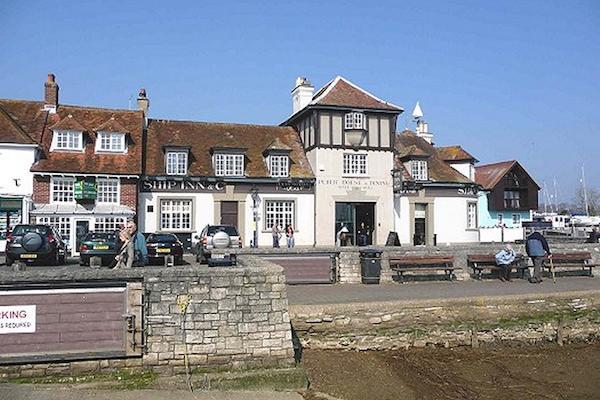
 Present buildings on the quay include The Ship Inn (dating from 1850) and The House on the Quay (once a bakery and shipping suppliers) built in 1675.
 Lymington’s wavy walls
 The parish church of St Thomas has a commanding position at the top of the High Street. Parts of the building date back to 1250.
 Press Gang Cottage at number 10 (accessed via steps) was once The Old Harlequin Inn reputed as being the headquarters of the Press Gang in the early 1800s (groups of men under the command of an officer, employed to press men for service in the Army or here, the Royal Navy).
 The Bath Road riverfront was once a place to listen to band concerts on the Victorian bandstand. The structure mysteriously disappeared during World War II to be replaced in 2000 by a new bandstand for the Millennium celebrations.
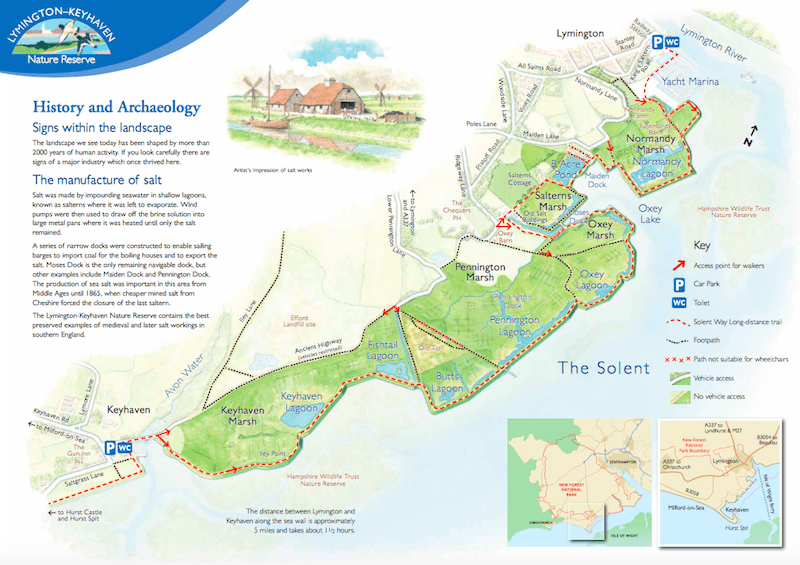
 For more than 700 years Lymington was a principal manufacturer of salt. Until the end of the 18th century, there was a continuous line of salt works along the coastline from Lymington to Hurst Spit, the biggest area of sea salt production in the country. It brought great wealth to the town.
 Ignore the first gate on the right but continue to the sailing lake at Eight Acre Pond. During the late 1950s, Major Tony Hibbert MBE MC (1917-2014) had this 8 acre salt pan on his land dredged out to a depth of 3 feet to provide a safe place to learn to sail. He established Salterns Sailing Club in 1960 as a sailing club for children, run by children. Children learn to sail and race here, and get practical experience running a club in a safe environment. Over the years thousands of young people have learnt to sail at Salterns, developing a respect and love for the sea which has stayed with them all their lives. Many applied their experience in running the club to good effect, in running of other clubs and in their chosen careers. The Salterns has been a starting point and inspiration for many national and international champions in a myriad of classes.

 East Boldre Village Hall:


 Commoners Tom and Lyndsey – expert and passionate about the New Forest


 The Tours were initially devised by a group of friends who researched local history and anecdotes from the past for fun and came to realise, after seeing tours in other locations, that they had enough material to warrant sharing this in a similar manner. So they started providing tours over 30 years ago with the founding tour of Lymington Town from its Norman origins to the present day, starting from St Thomas' church to the oldest settlement of the town, the Quay.
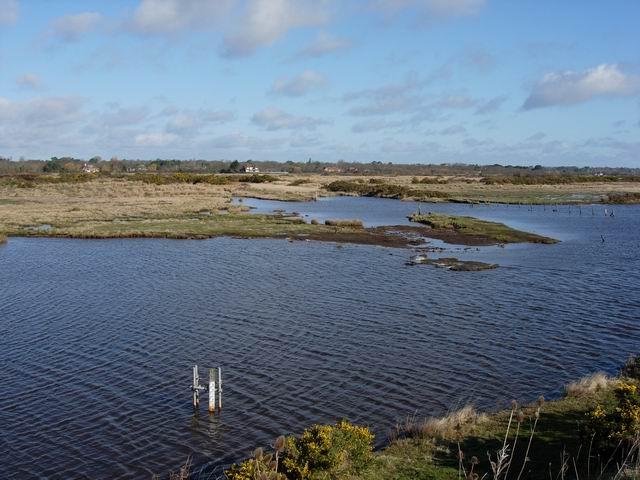 Management of the reserve
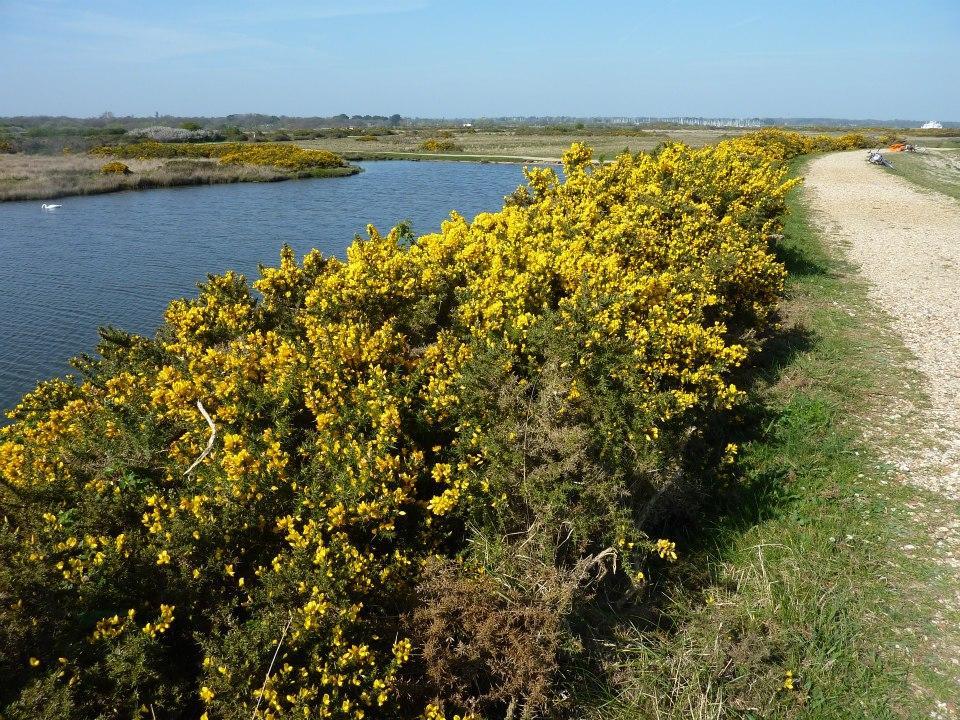 Just inside the seawall lie a series of shallow, brackish lagoons connected to the sea through a system of sluices and tidal flaps. The salinity in these lagoons varies widely, but is generally lower than seawater. This specialised habitat supports its own distinctive plants and animals, some of which are only found in this type of environment. The lagoons are some of the most important in Britain with populations of rare species including Foxtail Stonewort, Lagoon Shrimp and Starlet Sea- anemone. In winter the flooded lagoons are home to wildfowl such as Mallard, Shoveler and Teal. Spring and autumn bring migrant wading birds including Whimbrel, Curlew Sandpiper and Little Stint. The islands within Normandy Lagoon enable Little Tern, Ringed Plover and Oystercatcher to breed in relative safety.
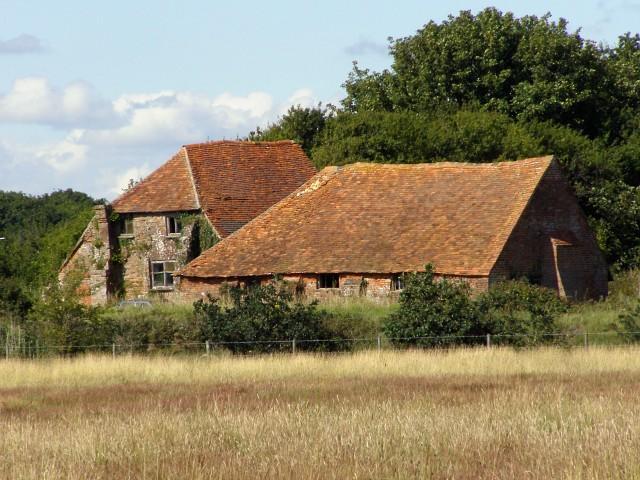 History and archaeology of the salterns
 Keep dogs under control. Don't let dogs approach or chase any animals